
Starlink Lands in Uganda: What It’s Arrival Means for Internet Users 🛰️🇺🇬
Uganda has entered a new era of digital connectivity.
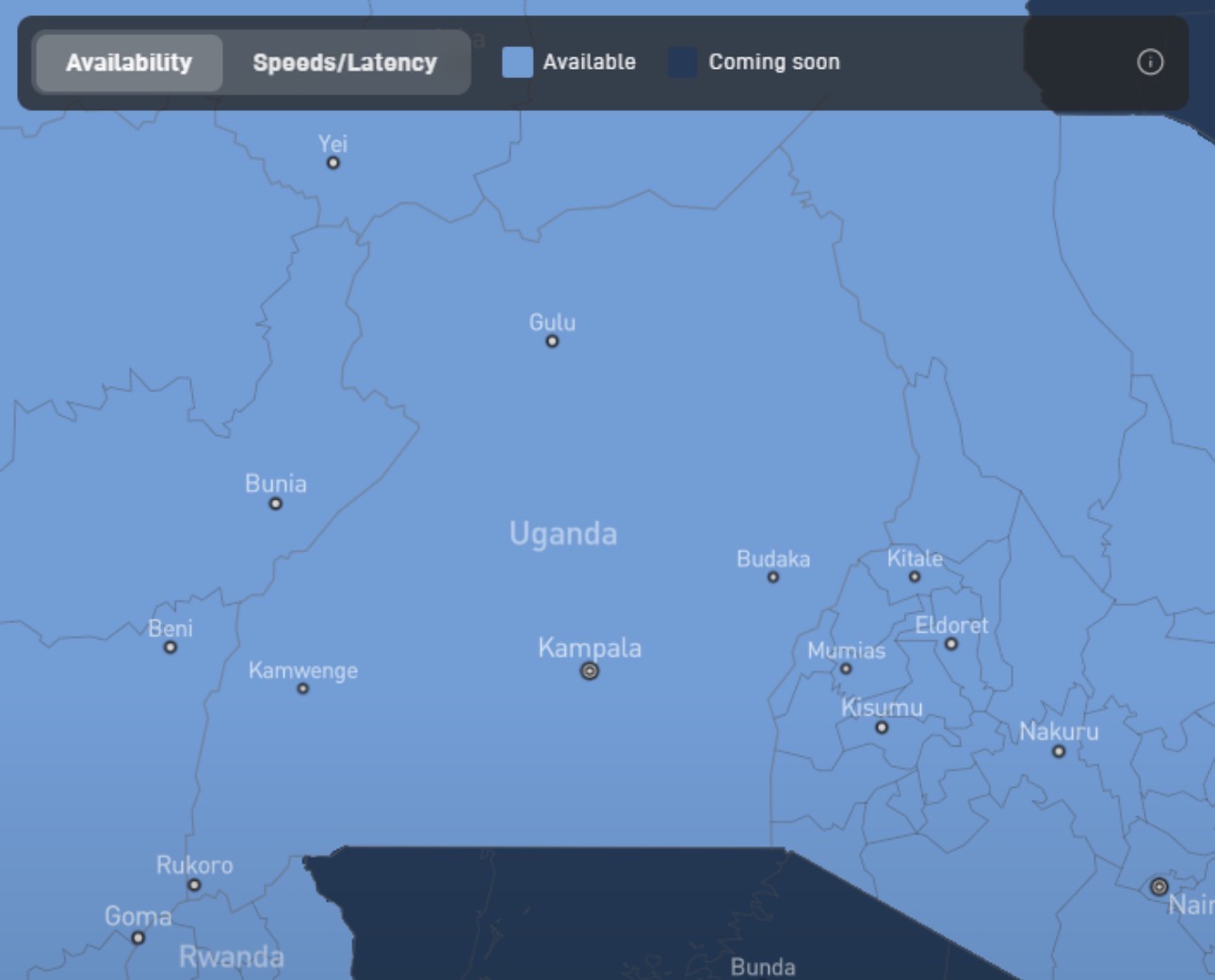
Uganda has officially entered a new phase in its digital connectivity journey following the arrival of Starlink, SpaceX’s satellite internet service. The technology is expected to expand access to high speed, low latency internet, particularly for businesses and organisations operating in areas where traditional telecommunications infrastructure remains limited.
Starlink’s entry into the Ugandan market follows months of regulatory discussions between the company and the Uganda Communications Commission
From Regulatory Dispute to Official Launch
Starlink’s journey into Uganda has not been without challenges.
Earlier in 2026, the UCC restricted unauthorised Starlink services being used in Uganda after raising concerns that the service was operating without a local licence. Starlink subsequently confirmed that its Ugandan subsidiary had not yet been authorised to sell or market its services locally.
The situation changed in May 2026 when the UCC and Starlink signed a Memorandum of Understanding and operational licence agreement at State House in Entebbe.
According to Daily Monitor, the agreement was intended to expand high-speed internet access, particularly in underserved areas, including rural schools and health facilities.
The government also highlighted the importance of security, revenue collection and regulatory compliance as part of Starlink’s entry into the Ugandan telecommunications market.
Starlink Begins Operations
The next major development came in August 2026 when Paratus Uganda launched Starlink’s low Earth orbit satellite internet service for enterprise customers.
The Independent reported that Paratus Uganda became the first provider in the country to launch Starlink’s LEO service following the company’s formal licensing.
TechAfrica News also reported that the service was initially aimed at businesses and organisations, particularly those operating in remote locations where reliable terrestrial connectivity can be difficult to obtain.
The development gives Ugandan businesses another option for accessing high speed internet without depending entirely on fibre optic cables or terrestrial infrastructure.
Why Starlink Matters
Starlink operates through a constellation of satellites positioned in low Earth orbit. Unlike traditional satellite internet systems that rely on satellites much farther from Earth, Starlink’s lower-orbit satellites are designed to provide higher speeds and significantly lower latency.
This makes the service suitable for activities that require responsive internet connections, including video conferencing, cloud applications, remote work, online communication and other business operations.
For Uganda, the technology could be particularly useful in areas where extending fibre networks or constructing additional telecommunications infrastructure is difficult or expensive.
**Potential Benefits for Rural Uganda
**
One of the biggest opportunities presented by Starlink is its ability to connect locations that have historically struggled with reliable internet access.
Businesses in agriculture, tourism, construction, mining, logistics and other industries often operate far from major urban centres. Reliable connectivity can be essential for these organisations to communicate with headquarters, access cloud services, process digital payments and maintain contact with customers.
The same technology could potentially benefit schools and health facilities in underserved areas.
A rural school with reliable internet could access online learning resources, while a health facility could communicate with specialists and access digital medical resource.
Daily Monitor reported that expanding connectivity to rural schools, hospitals and underserved communities was among the expected benefits of Starlink’s entry into Uganda.
What About Individual Internet Users?
While Starlink’s initial Ugandan rollout has focused on enterprise customers, reports published in September indicate that residential service is also becoming part of the market.
Pulse Uganda reported on September 2, 2026, that a residential package offering speeds of up to 100 Mbps was priced at approximately Shs203,704 per month, with an estimated initial equipment and installation cost of around Shs2.3 million.
The cost means Starlink may not be the cheapest option for every household.
For people already served by affordable fibre or reliable mobile broadband, conventional internet services may remain more economical. However, for households located in areas where reliable terrestrial internet is unavailable, satellite connectivity could provide an important alternative.
Competition in Uganda’s Internet Market
Starlink’s arrival also introduces another competitor into Uganda’s rapidly developing telecommunications industry.
MTN Uganda, Airtel Uganda and other internet service providers already offer mobile and fixed connectivity services across the country. Fibre providers have also expanded their networks in urban and suburban areas.
Starlink will therefore compete differently, particularly by targeting locations where conventional infrastructure may not be readily available.
Rather than completely replacing fibre and mobile networks, satellite internet could complement them by providing connectivity in difficult to reach locations.
The Future of Satellite Connectivity
Starlink’s arrival in Uganda is part of a much larger development in the telecommunications industry\.
SpaceX is also working with mobile network operators in Africa to introduce Direct\-to\-Cell technology, which aims to allow compatible mobile phones to connect directly to satellites without requiring a traditional Starlink dish\.
Airtel Africa and Starlink commercially launched a satellite\-to\-mobile service in the Democratic Republic of Congo in August 2026, demonstrating the potential for satellite technology to become increasingly integrated with conventional mobile networks\.
This could eventually provide another way of connecting people in remote areas where terrestrial mobile infrastructure is unavailable\.
Regulation and Security
Starlink’s experience in Uganda also demonstrates the importance of regulation in the satellite communications industry.
The earlier restriction of unauthorised Starlink terminals showed that satellite internet providers must comply with national licensing and regulatory requirements.
The May agreement between Starlink and the UCC addressed issues including licensing, security, accountability and government revenue.

Stay rated, stay laughing.
Replies
0Sign in to join the thread.
- No replies yet.