
The Invisible Architecture: Why Data Structures Quietly Run the World
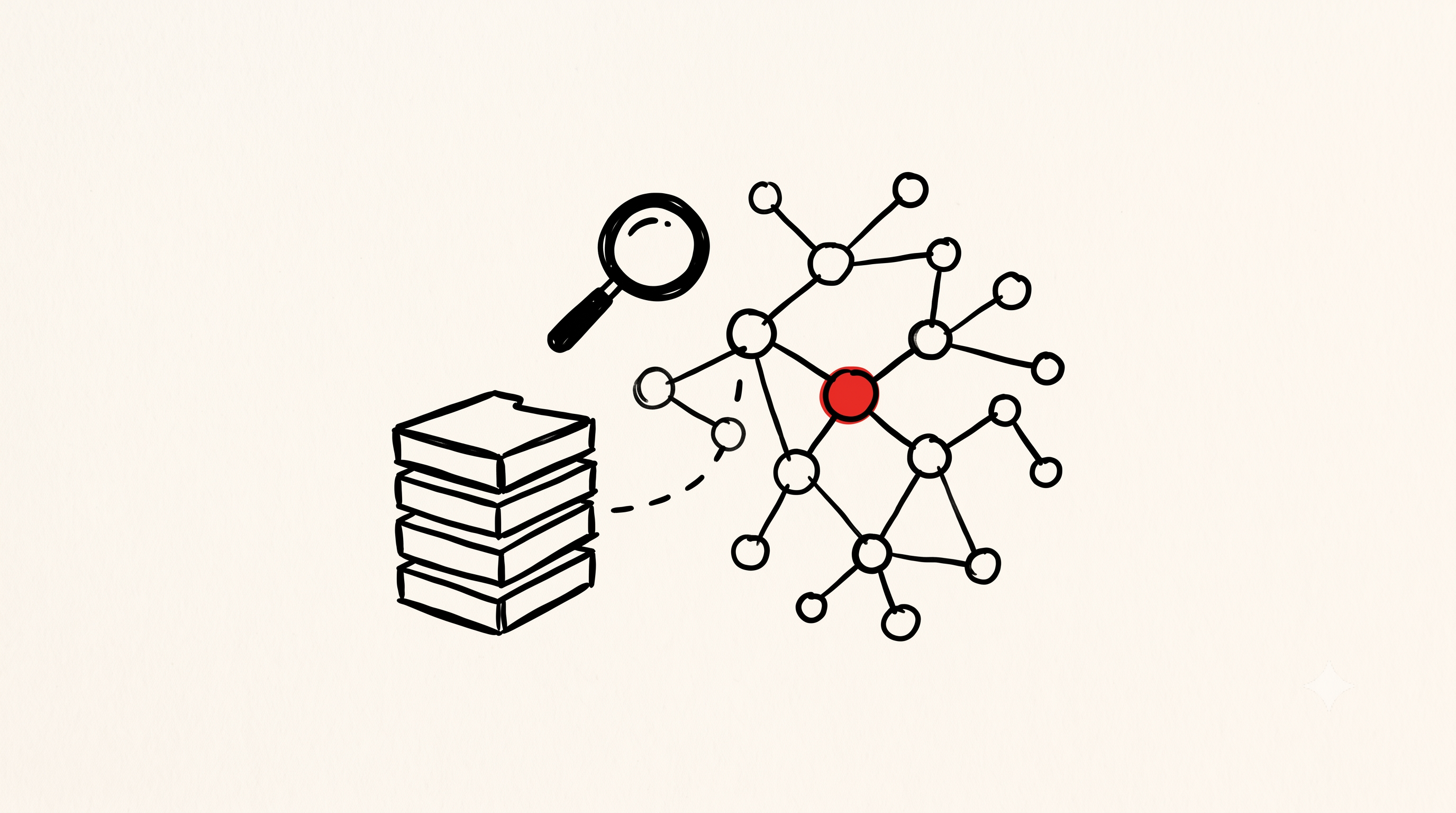
Every time you scroll a feed, search for a word, or send a message that arrives instantly, you're relying on a decision made decades ago about how to organize information. That decision — the data structure underneath the software — is one of the least visible, most consequential ideas in computing. Get it right, and an app feels instant. Get it wrong, and the same app buckles under its own weight the moment real users show up.
What a data structure actually is;
Strip away the jargon, and a data structure is simply a way of organizing information so a computer can find, add, or change it efficiently. The data itself rarely changes — what changes is how it's arranged, and that arrangement determines how fast (or slow) everything built on top of it will run.
A few of the foundational ones show up almost everywhere:
- Arrays — data stored in a fixed, ordered sequence. Fast to access by position, but expensive to resize or rearrange.
- Linked lists — data connected by pointers rather than position, making insertion and removal cheap, but lookup slower since you have to walk the chain.
- Hash tables — data mapped by a computed key, giving near-instant lookups. This is what powers things like checking whether a username already exists, almost instantly, even across millions of accounts.
- Trees — hierarchical structures, ideal for anything naturally nested — file systems, organizational charts, decision logic, or database indexes that need to search sorted data quickly.
- Graphs — networks of connected nodes, the natural structure behind social networks, recommendation engines, and mapping/navigation systems.
None of these is "better" in the abstract. Each is a trade-off, and the entire discipline of software engineering leans heavily on choosing the right one for the job at hand.
Why this matters more than most people realize
Consider a social feed. If posts were stored as a simple unsorted list, finding "the latest 20 posts from people you follow" would mean scanning everything, every time — fine for a hundred users, catastrophic for a hundred million. Real platforms instead lean on layered structures: indexes (tree-based) for fast lookups, graphs to represent who-follows-whom, and caching layers (hash-based) to avoid recomputing the same answer twice.
This is the quiet difference between an app that feels instant and one that grinds to a halt as it grows. It's rarely the "big idea" that breaks under scale — it's the data structure decisions made early, often invisibly, that determine whether a product can handle success.
The trade-offs never disappear
There's no data structure that's fast at everything. A structure optimized for quick lookups is often slower to update. One optimized for ordered data is often slower to search unsorted. This is why experienced engineers spend real time thinking about access patterns — how the data will actually be read and written in practice — before choosing how to store it, rather than defaulting to whatever's easiest to set up first.
It's also why performance problems in mature software are so often solved not by rewriting the whole system, but by swapping one data structure for a better-suited one at the exact point where the bottleneck lives.
The part nobody sees, but everyone feels
Data structures rarely get the spotlight. Nobody talks about them the way they talk about a slick user interface or a clever feature. But they're the reason a search returns in milliseconds instead of seconds, the reason a messaging app doesn't lag as your friend list grows, the reason a map app can route you through a city of millions of roads almost instantly.
The best software doesn't just look good — it's built on structure decisions so sound you never notice them at all. That invisibility is the whole point.

Stay rated, stay laughing.
Replies
0Sign in to join the thread.
- No replies yet.